A hot tub is a great place to relax, but it can be hard to enjoy a soak when your backyard feels exposed. When you have neighbors with an elevated deck, second-story windows overlooking your yard, or an open property line, achieving real privacy around your hot tub can be a challenge.
Fortunately, you don’t need to hide your hot tub away to make it feel more private. The right setup can give you more separation where you want it while keeping the backyard open and comfortable. After all, the goal is to create your year-round haven, not wall yourself off from the rest of your outdoor space.
Hot Tub Privacy: What to Keep in Mind
· Start by figuring out where your hot tub feels most exposed, so you only add privacy where you need it.
- Use existing fencing, landscaping, and the layout of your home to your advantage before adding new features.
- Plants, privacy screens, fencing, pergolas, and gazebos can all provide different levels of coverage depending on your backyard.
- Leave enough room around the spa to open the cover, access the equipment, and comfortably get in and out.
- Check local requirements before adding permanent fencing, barriers, or structures around your hot tub.
There’s no one-size-fits-all way to make a hot tub more private. The best approach depends on your backyard, where your hot tub sits, and where those exposed views are coming from. The goal is to block the views you’d rather not have without taking away from the space, light, or surroundings you already enjoy.
Here are a few hot tub privacy ideas to help you find what works for your space.
Choose the Right Spot for Your Hot Tub
Where you put your hot tub can make a big difference in how private it feels.
See Where You Feel Most Exposed
Take a look around from inside the hot tub, or from where you’re planning to put it. Can the neighbors see in from their deck? Is there a second-story window overlooking the yard? What about the sidewalk or the property next door?
You might realize that most of the spot already feels pretty private and there’s really only one line of sight you need to block.
Work With What You Already Have
A hedge, fence, side of the house, alcove, or secluded corner can all give you a head start on privacy – just don’t tuck the hot tub so far out of the way that getting to it becomes a pain. A little extra privacy probably won’t feel worth it when you’re making a long walk across the yard in the middle of winter.
Make Sure the Spot Works
Privacy matters, but so does having enough room to use your hot tub. You’ll need a solid base, a comfortable way to get in and out, room to open the cover, and access to the equipment when it needs maintenance.
If you’re sinking the hot tub into a deck or building decking around it, plan for that access from the beginning. It’s much easier than trying to figure it out once everything is built.

Create Privacy with Plants and Landscaping
Landscaping is one of the easiest ways to create natural privacy without making a hot tub feel boxed in. Plants can soften the edges of a deck or patio while breaking up direct views into the spa, and they also give you plenty of flexibility depending on how much height and coverage you need.
Use Evergreen Hedges for Year-Round Coverage
Seasonality is worth considering before planting for privacy. A backyard that feels completely secluded in July can look very different in January once the leaves are gone.
This is why evergreen hedges are particularly useful if you use your hot tub throughout the year. Unlike deciduous plants that lose their leaves, evergreens can continue blocking sightlines through the winter.
Helpful Tip: Give hedges enough room to reach their mature height and spread without pressing against the hot tub cabinet or blocking access to the equipment.
Add Climbing Plants, Vines, or a Living Wall
A trellis covered in climbing plants or vines can create privacy without the visual weight of a solid fence. Living walls and vertical gardens can work similarly, particularly when patio space is limited and you want to add greenery without taking up too much floor space.
Helpful Tip: Think about maintenance before planting anything directly beside a spa. Leaves, flowers, berries, pollen, and other organic debris can end up in the water whenever the cover is open.
Use Potted Plants for Flexible Privacy
Large potted plants are a good option when you don't want to permanently change the landscaping. Place tall planters along an exposed edge, beside the hot tub steps, or near a privacy screen to interrupt a direct line of sight. The best part is, you can also rearrange these as your needs change.
Helpful Tip: Try layering plants at different heights rather than creating one solid wall of greenery. Taller evergreens or grasses can provide coverage, while lower shrubs and fragrant flowers make the area feel more like intentional landscaping.
Add Privacy Screens, Fences, and Other Barriers
When landscaping doesn't provide enough coverage, a physical barrier can create more immediate privacy. The best choice for your space will depend on how much of the hot tub you want to shield, how permanent you want the solution to be, and the overall style of your backyard.
Add a Hot Tub Privacy Screen
A hot tub privacy screen is useful when you only need to block one particular view. Warm wood slats can complement a deck or natural backyard, while laser-cut metal screens offer a more contemporary look. Trellises, wicker dividers, bamboo screens, and other freestanding options can also provide coverage without requiring a full fence.
You don't always need a completely solid screen – slatted designs can interrupt the line of sight while allowing more light and air through, which can keep a smaller patio from feeling enclosed.
Helpful Tip: Whatever material you choose, make sure freestanding privacy screens are properly secured for the wind conditions in your yard.
Choose the Right Type of Fence
If your hot tub sits close to a property line, sidewalk, or neighboring patio, a privacy fence can give you more coverage than a smaller screen.
The right style of fence for you will depend on how much privacy you want. Slatted fencing can block direct views while keeping the space feeling more open, while traditional wood or tongue-and-groove fencing provides more complete coverage. You can also combine a solid lower section with lattice or spaced slats above to bring in more light and airflow.
Helpful Tip: Whichever style you choose, look for something that works with the rest of your backyard. Matching your deck, landscaping, or other materials can help the fence feel like a natural part of the space.
Consider Retractable or Semi-Private Barriers
Not every privacy feature has to stay closed all the time. Retractable partitions and outdoor fabric panels can provide privacy when you're soaking and open the space back up when you're entertaining. Tinted glass panels may be another option for some backyard designs where you want to maintain a more open appearance.
Helpful Tip: Flexible barriers can be particularly useful when the hot tub shares a larger patio, pool deck, or entertaining area.
Consider a Hot Tub Enclosure or Gazebo
Sometimes the problem isn't the view beside the hot tub – it's the view from above. If a second-story window, elevated deck, or neighboring property overlooks the spa, a hot tub enclosure, pergola, gazebo, or shade structure can provide coverage that a traditional fence can't.
Add a Pergola or Wooden Gazebo
A pergola can define your hot tub area without completely closing it in. Lattice walls, climbing vines, outdoor curtains, or sun shades can be added where you want more coverage while leaving other sides open. Curtains are particularly useful because you can close them for a quieter soak and tie them back when you want the backyard to feel more open.
A wooden gazebo provides more substantial coverage and shelter, which may be especially appealing if you use your hot tub in colder or wetter weather. These features can also help change the atmosphere when you're creating a romantic retreat, planning a date night, or simply want the spa to feel like its own space.
Explore Partially or Fully Enclosed Hot Tub Spaces
If you want more coverage, there are also hot tub enclosures that create a more defined room around the spa. Depending on the backyard and climate, that could mean lattice walls, modern partitions, metal or vinyl walled-in areas, or a pre-assembled enclosure kit.
Helpful Tip: Think carefully about doors, windows, and openings before choosing a more enclosed design. You still need an easy route into and out of the hot tub, along with access to the equipment and enough space to remove the cover.
Plan for Airflow and Ventilation
The more enclosed your hot tub becomes, the more important ventilation is. After all, hot water produces a significant amount of warm, humid air. A privacy enclosure needs enough airflow to let that moisture escape rather than trapping it around the spa and surrounding materials.
Helpful Tip: Choose outdoor materials and finishes suited to moisture and consider ventilation levels when deciding how much of the structure should remain open.

Common Hot Tub Privacy Concerns
A privacy feature may look great on paper, but there are a few practical considerations worth working through before you install one:
Fence Height and Local Requirements
There isn't one recommended fence height that works for every backyard. The height you need for visual privacy depends on the position of your hot tub and the line of sight you're trying to block. A fence that shields a neighboring patio, for example, may do little to block a second-story window.
Safety requirements are a separate consideration. A decorative privacy screen isn't automatically a compliant safety barrier. The U.S. Consumer Product Safety Commission's residential pool, spa, and hot tub barrier guidance includes recommendations for barrier height, openings, clearances, and gates and advises homeowners to consult their local building or code authority.
Check the guidelines and legal obligations that apply where you live before installing permanent fencing or another barrier.
Hot Tub Access and Clearance
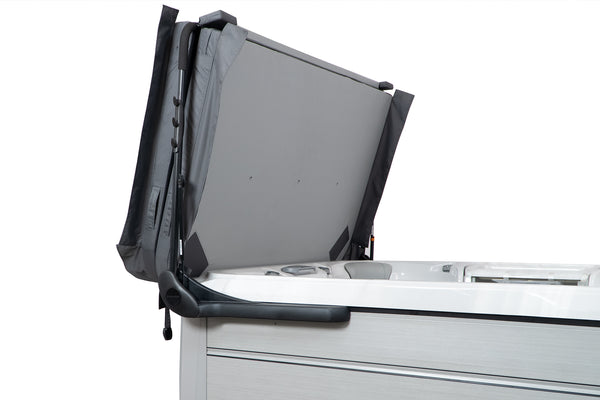
Your privacy setup shouldn't prevent you from accessing the unit. Before permanently installing a fence, screen, planter, or enclosure, open your hot tub exactly as you normally would. Fold the cover, operate your cover lifter, and look at where everything ends up.
Different hot tub models, cover sizes, and lifter designs require different amounts of clearance, so checking your actual setup is more useful than relying on one generic measurement. You will also need a clear route to the equipment panel so filters, pumps, and other components can be reached for routine maintenance or service.
Wind and Weather
Wind conditions matter, especially with freestanding screens, curtains, shade sails, artificial greenery, and other lightweight privacy features.
Anything installed around the hot tub should have the appropriate support for its material, size, and location. For example, a partition that barely moves on a calm afternoon may behave very differently during strong winds.
Permanent structures and larger barriers may also be subject to local building requirements, so check applicable guidelines before installation.
Noise and Neighbor Considerations
Privacy doesn't necessarily mean your hot tub is isolated from neighboring properties. If homes or patios are close together, being mindful of noise levels can go a long way toward avoiding neighbours' complaints.
Keep voices and music at a reasonable volume, particularly later in the evening, and consider where speakers or other outdoor entertainment features are positioned. A little courtesy to neighbours can be just as important as the fence between you.
Protect Your Backyard Retreat with The Cover Guy
Once you've created a hot tub space that feels private and comfortable, the last thing you want is for everyday upkeep to get in the way of enjoying it.
A properly fitted hot tub cover helps keep debris out of the water, retain heat between soaks, and protect your spa when you're not using it. Adding a cover lifter can make opening and closing the spa easier, too, so getting ready for a soak doesn't feel like a chore.
The Cover Guy offers hot tub covers in Canada and the US, along with cover lifters and accessories to help make every day hot tub care a little easier.
With the right privacy around your spa and the right protection when you're not using it, your backyard can stay ready for whenever you want to get in and unwind.
Hot Tub Privacy FAQs
Do I Need Permission to Build a Privacy Fence or Hot Tub Enclosure?
Possibly. Local rules may regulate fence heights, setbacks, hot tub barriers, enclosures, and other permanent structures. Check with your local building or code authority before starting your project so you know which requirements apply where you live.
Can a Hot Tub Be Fully Enclosed?
Yes, but a fully enclosed hot tub requires some extra planning. Warm water creates a lot of moisture, so ventilation is important to prevent humid air from becoming trapped inside the space. You'll also need enough room to safely enter and exit the spa, open the cover, and access the equipment for maintenance.
What Is the Cheapest Way to Add Privacy Around a Hot Tub?
Start with the specific area where you feel most exposed rather than trying to enclose the entire hot tub. A freestanding screen, large planters, bamboo screening, outdoor curtains, or a trellis can provide targeted coverage without the cost of custom fencing or a permanent enclosure.
Can You Use Plants as a Privacy Screen Around a Hot Tub?
Yes! Evergreen hedges, tall grasses, climbing plants, and large potted plants can all help create privacy around a hot tub. Just leave enough room between plants and the spa for mature growth, maintenance access, and debris such as leaves or flowers that may fall into the water.
Does a Hot Tub Need Privacy on All Sides?
Not necessarily. If only one side of your hot tub is visible from a neighboring property, sidewalk, or window, you may only need to address that particular sightline. Leaving other sides open can help the space feel less enclosed and preserve views you already enjoy.